The Complete Guide to Lead Routing: Getting the Right Lead to the Right Person
Learn how intelligent lead routing can increase your conversion rates by up to 300%. We cover the strategies, tools, and best practices for optimizing lead distribution.
What Is Lead Routing?
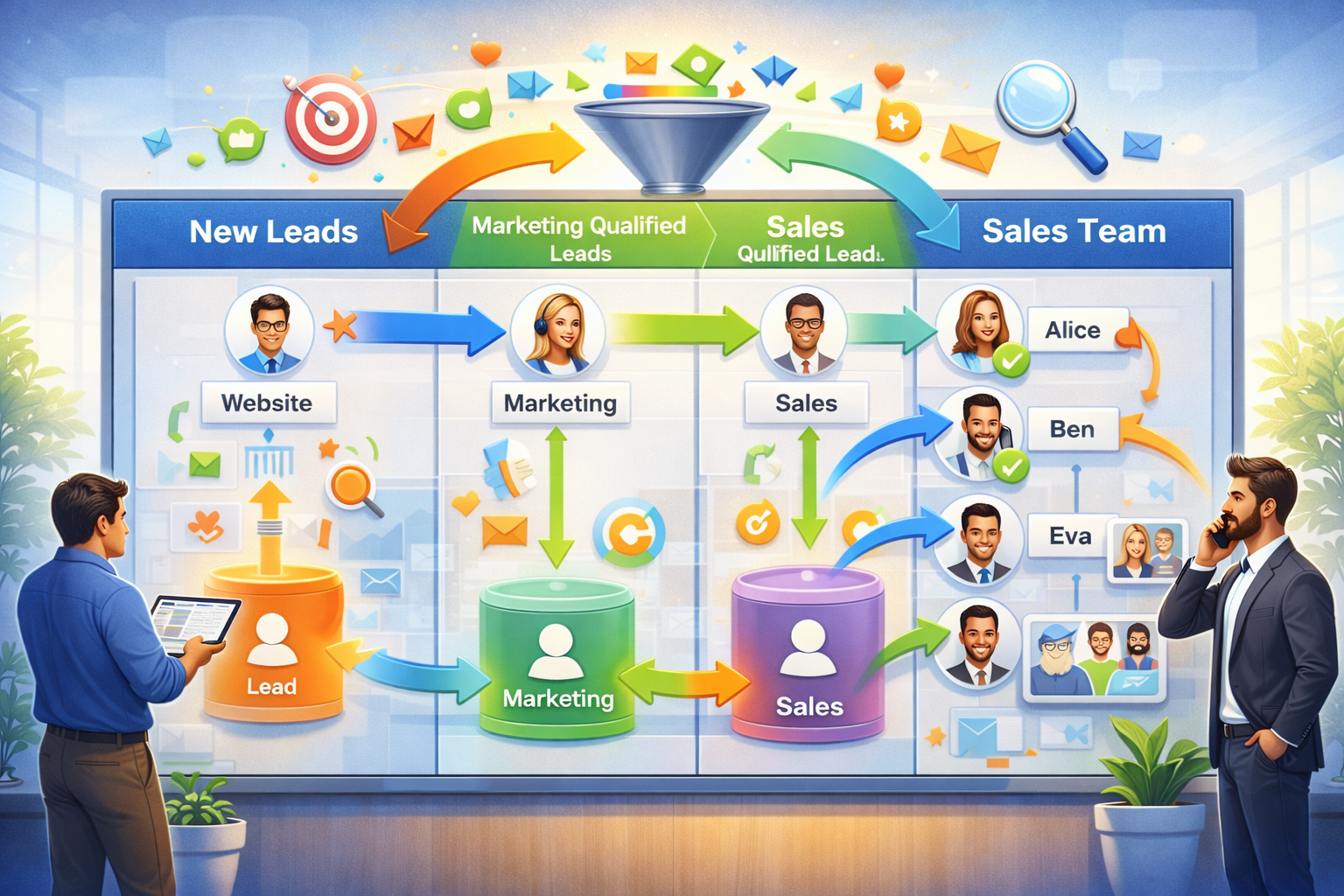
Lead routing is the process of automatically distributing incoming leads to the right salesperson, team, or partner based on predefined criteria. Done well, it ensures that every lead gets a fast, relevant response—which is the single biggest factor in conversion.
Why Speed Matters
Research consistently shows that responding to leads within 5 minutes increases conversion rates by up to 900% compared to waiting 30 minutes. Yet the average business takes over 47 hours to respond to a new lead.
Automated lead routing eliminates this delay by instantly connecting leads with the right person.
Types of Lead Routing
Round Robin
Leads are distributed evenly across team members in rotation. This is the simplest approach and works well for teams where all members have similar skills and capacity.
Skill-Based Routing
Leads are matched to team members based on their expertise, location, or specialty. For example, a commercial roofing lead goes to the commercial specialist, while a residential lead goes to the residential team.
Category-Based Routing
In multi-category platforms like LeadFlow, leads are routed based on the customer's expressed interest. A lead interested in solar gets routed to the solar company, while an insurance-interested lead goes to the insurance agent.
Territory-Based Routing
Leads are assigned based on geographic location. This is essential for businesses with multiple locations or service territories.
Best Practices
- Set clear routing rules before launching any lead generation campaign
- Automate follow-up with immediate acknowledgment messages
- Monitor response times and set alerts for slow responses
- Track conversion rates by routing rule to optimize over time
- Have backup rules for when primary assignees are unavailable
The Impact of Good Routing
Businesses that implement intelligent lead routing see dramatic improvements:
- 300% increase in lead conversion rates
- 50% reduction in response time
- 25% improvement in customer satisfaction
- 40% increase in sales team productivity
If you're still manually distributing leads or using a basic round-robin system, it's time to upgrade to intelligent, category-based routing.